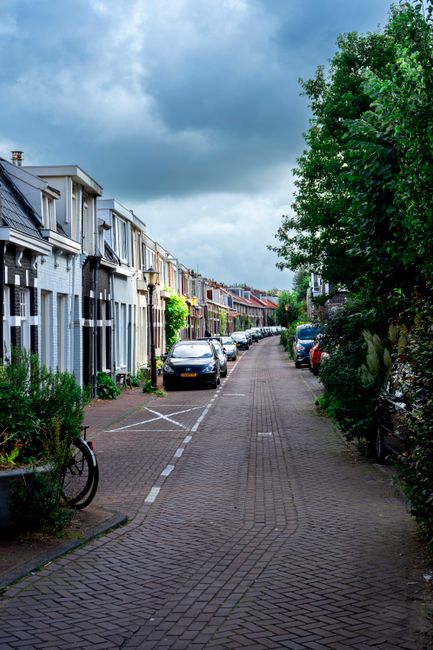
Permits and street closure rules for Holland Park removals: what you need to know before moving day
Moving in Holland Park can feel deceptively simple on paper. Then the van arrives, the road is narrower than expected, the bay is already occupied, and suddenly the whole day depends on whether you've planned for permits and street closure rules for Holland Park removals. That is the bit many people overlook. The paperwork, timing, access restrictions, and parking controls are not glamorous, but they can make the difference between a calm move and a stressful one.
This guide breaks the topic down in plain English. You'll learn when a permit may be needed, how street closures are typically handled, what to check before moving day, and how to avoid the classic mistakes that cause delays. If you are moving a flat, a family house, or a business premises, the principles are similar: plan early, confirm access, and leave yourself a bit of breathing room. Because in London, especially in busy residential streets, "we'll just wing it" is a risky strategy.
Why permits and street closure rules matter
Street access is one of the biggest hidden variables in any London move. In Holland Park, you may be dealing with controlled parking zones, permit restrictions, time-limited loading bays, narrow side streets, resident-only areas, or roads where a large vehicle simply cannot sit for long without causing a problem. If your removal vehicle blocks traffic, parks in a restricted bay, or uses a closure without permission, the move can unravel fast.
That matters for three reasons. First, it affects legal compliance. Second, it affects time because crews may need to wait, reposition, or unload in multiple trips. Third, it affects cost because delays often turn into extra labour time, more parking charges, or a second journey. Nobody wants to pay for avoidable chaos.
There is also the neighbour factor. A removal day already creates noise: footsteps on stairwells, a door propped open, box tape ripping, the low rumble of a van reversing. If access is managed badly, the whole street feels the disruption. If it's managed well, the move is surprisingly smooth. That difference usually comes down to preparation, not luck.
Expert summary: The earlier you confirm loading access, parking permissions, and any street closure requirements, the more likely your Holland Park move will stay on schedule and within budget. A small admin task now can save a very long afternoon later.
How permits and street closure rules for Holland Park removals works
There is no single universal rule for every street in Holland Park. The requirements depend on the exact road, the type of vehicle, the time of day, and whether you need to occupy public highway space. In practice, the process often revolves around three questions:
- Can the removal vehicle park legally close enough to the property?
- Is the loading area controlled, reserved, or shared with residents?
- Does the move require temporary traffic management or a formal street closure?
For a straightforward domestic move, you may only need a suitable loading arrangement and enough space for the van to stop safely. For a larger property, a bulky item move, or a tight street with no safe stopping point, you may need additional permissions or traffic control. If a road closure is required, it is usually treated as a much more serious step than a parking arrangement. In plain terms: moving a van into a legal bay is one thing; closing a street is another entirely.
It also helps to think about the move from the vehicle's perspective. A smaller vehicle such as a man and van setup may fit where a larger lorry will struggle. A bigger job that needs a moving truck may require more planning around access, turning room, and loading time. Truth be told, the road decides a lot more than people expect.
In busy parts of west London, timing matters too. Morning school runs, delivery windows, event traffic, and commuter flow can all affect what is realistic. A move that looks fine at 11:30 on a Sunday might be awkward at 8:00 on a weekday. Same street, very different day.
Key benefits and practical advantages
Getting permits and street closure rules right is not just about avoiding penalties. It makes the entire move more controlled and less frantic. That has some very real benefits.
- Faster loading and unloading: the crew can work close to the property instead of ferrying items from a distant bay.
- Lower risk of delays: fewer interruptions from parking issues, enforcement, or vehicle repositioning.
- Better safety: safer routes for carrying furniture, especially heavy or awkward items.
- Cleaner neighbour relations: less obstruction, less honking, less tension outside the front door.
- More accurate planning: if access is confirmed, the removal team can estimate the day more realistically.
There is also a less obvious advantage: a properly planned move reduces decision fatigue on the day itself. You are already juggling keys, cleaners, boxes, final meter readings, and that one drawer everyone forgot about. Removing permit uncertainty from the list is a small but meaningful relief.
If you are still comparing how to organise the job, the right support can help. A well-planned removal service should not treat access as an afterthought. It should be part of the quote and the move plan from the start. And if you need help with packing before the vehicle arrives, services such as packing and boxes or packing and unpacking services can take pressure off the schedule.
Who this is for and when it makes sense
This topic matters to almost anyone moving in the area, but some people need to pay extra attention.
- Homeowners and tenants moving from houses, mews properties, or flats with limited frontage.
- Flat movers where the nearest legal loading point is not right outside the building.
- Office managers who need coordinated access for desks, IT equipment, and file cabinets.
- Students moving in or out on busy days when kerb space disappears quickly.
- Piano owners or anyone moving delicate, heavy, or high-value items.
If your move involves a compact load and easy on-street stopping, you may only need a simple parking solution. If you are moving a whole household, a long-term office, or a property with awkward access, the permit question becomes much more important. It also becomes more important if your building management has its own rules, such as booked lifts, loading windows, or concierge sign-in procedures.
For example, a top-floor flat move with no lift and a narrow street outside can go from "pretty manageable" to "why did we choose this date?" very quickly. It's not dramatic, it's just London doing London things.
For residents moving between apartments, flat removals are often the scenario where access planning matters most. For larger domestic moves, house removals and home moves tend to need more detailed scheduling. Commercial clients, meanwhile, often benefit from reviewing commercial moves and office removals guidance well ahead of time.
Step-by-step guidance
Here's the cleanest way to approach a Holland Park removal when permits or street restrictions may be involved.
- Check the exact address and street layout. Look at where a vehicle can safely stop, where it can turn, and whether there is space for doors to open without blocking pedestrians.
- Identify any parking controls. Loading bays, resident bays, single yellow lines, red route restrictions, and private forecourts all need different handling.
- Confirm the vehicle size early. A small removal van may fit where a larger truck will not. The wrong vehicle choice can create a chain reaction of delays.
- Ask whether a permit or suspension is needed. Some roads are fine with ordinary loading; others need advance permission or temporary restriction management.
- Check for street closure impacts. If your move involves a lane, shared access point, or building works nearby, you may need a formal traffic arrangement rather than a simple parking plan.
- Share access details with the removal team. Mention door codes, lift bookings, stair widths, nearby restrictions, and any unusual access points.
- Plan the loading order. Put essentials, fragile items, and high-priority boxes near the exit so the crew can move efficiently.
- Keep a buffer in the schedule. Even a well-run move can hit a small snag, like a blocked curb or a neighbour's delivery van. A little flexibility helps.
If you want to make the whole day more manageable, support services matter too. Good house removalists or experienced removal companies should ask the right access questions before the first box is lifted. They should not leave you guessing.
A practical point: if you are moving out of a difficult street, tell the team which side of the road is safer for loading. That one detail can save ten minutes here, fifteen there, and a whole lot of grumbling.
Expert tips for better results
These are the little things that make a move feel calm rather than chaotic.
- Use a short access note. Write down the bay type, closest legal stopping point, building entry instructions, and any restrictions. Give it to everyone involved.
- Be realistic about traffic. A move may be legally allowed at one time and impractical at another. Avoid peak congestion where possible.
- Think in terms of loading distance. Every extra metre from van to door matters when carrying heavy boxes or furniture.
- Reserve lift time if needed. For flats and offices, an elevator booking can be as important as a parking plan.
- Keep the big pieces together. Bulky items should be staged first so the crew is not weaving around smaller boxes later.
- Ask about insurance and handling. Access planning is one thing; protecting items while moving through shared spaces is another.
There's also a simple human tip: don't wait until the van is idling outside to start checking the rules. By then, you are already spending time. We've all seen that slightly panicked face at the front door. Not ideal.
If your move includes a piano, fragile antiques, or awkwardly shaped furniture, specialist handling becomes more important. In that case, piano removals and furniture removals are worth considering because they account for access, weight, and route planning together rather than separately.
Common mistakes to avoid
Most problems come from a handful of predictable mistakes. The good news is they are easy to avoid once you know what to look for.
- Assuming parking is fine because "it's only for an hour." That is exactly the kind of assumption that causes trouble.
- Choosing a vehicle that is too large. Bigger is not always better. It can be slower, harder to park, and harder to manoeuvre.
- Forgetting about loading restrictions. A bay may exist but still not be usable during your chosen time window.
- Not telling the team about building rules. Some buildings require advance notice, insurance details, or specific loading instructions.
- Leaving it to the day of the move. If permits or access permissions are needed, last-minute arranging is stressful and sometimes impossible.
One more that trips people up: not all "street closure" issues are full road closures. Sometimes people use the phrase loosely when they really mean restricted access, temporary suspension, or a vehicle occupying the kerbside. The distinction matters. A lot.
And if a move becomes urgent, same-day planning may still be possible in some cases, but it leaves you with less room for error. That is where same-day removals can help, provided the access is straightforward enough to do safely and legally.
Tools, resources and recommendations
You do not need a complicated toolkit, but you do need a few practical things ready.
- Street view and site photos: useful for checking turning room, bay markings, and potential obstacles.
- Floor plans or building notes: especially helpful for flats, offices, and properties with awkward internal layouts.
- Room-by-room inventory: helps estimate loading time and vehicle size.
- Access summary: a short written note about where the van can stop, how long it can stay, and who controls the building entry.
- Removal schedule: a rough sequence for loading, travel, unloading, and any return trip.
For readers who want a more structured move, it can also help to compare service levels. Some people only need a straightforward load-and-go setup; others benefit from a fuller package that includes packing, transport, and storage. If you are between homes or waiting for completion, storage can be a practical bridge rather than a panic decision.
And if you want the job handled by a team that already thinks through access, timing, and vehicle choice, it is worth looking at a broader removals approach rather than booking the transport piece in isolation. That kind of joined-up planning is often what makes the difference in central and west London areas.
Law, compliance, standards and best practice
Because this topic involves public roads, parking controls, and possible traffic disruption, it sits close to local highway rules and general road safety expectations. The exact requirements can vary by street and by the type of activity involved, so it is always sensible to confirm the details for your address before assuming anything. In practice, the safest approach is to treat permits, suspensions, and closures as operational requirements, not admin extras.
Best practice usually includes:
- checking whether the vehicle can legally stop for loading
- making sure access will not block pedestrians, cyclists, or emergency routes
- planning for the shortest practical loading distance
- keeping neighbours and building managers informed where relevant
- using properly insured and appropriately sized vehicles
If a move needs a street closure, temporary traffic management, or special arrangements, the risk profile goes up. That means the moving plan should be clear, documented, and handled conservatively. No shortcuts, no vague promises. To be fair, that is how good removals work anyway.
For business clients, compliance is often even more important because office relocations can involve sensitive documents, equipment, and tighter timelines. A coordinated plan around access and vehicle positioning can reduce disruption and protect workflow. If that sounds familiar, take a look at office relocation services alongside the access planning side of the job.
Options and comparison table
Different moves need different access solutions. Here is a simple comparison to help you think it through.
| Option | Best for | Pros | Watch-outs |
|---|---|---|---|
| Standard kerbside loading | Smaller domestic moves with legal stopping space | Simple, fast, usually the least disruptive | May not work in restricted streets or busy periods |
| Parking permit or suspension | Moves needing a reserved or protected loading spot | Reduces uncertainty and keeps the vehicle close | Needs advance checking and accurate timing |
| Temporary street closure / traffic control | Complex moves, awkward access, safety-sensitive situations | Best for difficult access and larger operations | More planning, more coordination, more lead time |
| Smaller vehicle approach | Narrow streets, flats, short-distance loads | More manoeuvrable, often easier to position | May require more trips if the load is large |
In real life, many Holland Park moves use a mix of these approaches. A smaller vehicle for the street, a booked lift for the building, and a disciplined loading sequence can be much better than trying to force one huge lorry into a place that was never meant for it.
Case study or real-world example
Here is a realistic example. A family moving from a top-floor flat near a narrow residential street had assumed the van could stop directly outside for an hour. On paper, that seemed fine. But on the day, a neighbour's delivery vehicle was already occupying the usable space, and the road markings meant only a short loading period was practical. The crew had to split the load, carry some items farther than expected, and wait for a second window to finish the heavier furniture.
Nothing disastrous happened, but it turned a tidy plan into a longer afternoon. The final part of the move was still completed, just with more effort and a bit more stress than necessary. If they had confirmed the access rules earlier, they could have used a smaller vehicle, staged the boxes differently, and booked the timing around the busiest part of the street.
That is the real lesson here. Most access problems are not dramatic emergencies. They are small avoidable frictions. A bit like finding out the kettle is packed in the last box. Annoying, not fatal, but annoying all the same.
Practical checklist
Use this checklist a few days before moving day.
- Confirm the exact moving address and access points.
- Check whether the street has parking controls or loading restrictions.
- Decide whether you need a van, a larger truck, or a smaller vehicle.
- Ask whether any permit, bay suspension, or street closure arrangement is needed.
- Tell the removal team about stairs, lifts, tight corners, or concierge rules.
- Book building access or lift times if required.
- Prepare a clear load order for boxes and furniture.
- Keep essentials separate so they are easy to reach first.
- Allow a little extra time for parking, walking distance, and traffic.
- Keep contact details handy in case the plan needs to change on the day.
If your move includes extra packing pressure, a service such as packing and unpacking services can make the schedule more manageable. And if you need flexibility around timing, student removals or smaller-load options may suit shorter, simpler moves. Different people, different needs. That's normal.
Get a free quote today and see how much you can save.
When you are planning permits and street closure rules for Holland Park removals, the smartest move is usually the calmest one: confirm access early, keep the plan practical, and choose the vehicle and service level that match the street rather than fighting it. That way, moving day feels organised instead of improvised, and honestly, that peace of mind is worth a lot.
Conclusion
Permits and street closure rules may sound like a small technical detail, but in Holland Park they can shape the whole moving experience. The right access plan keeps the van close, the crew efficient, and the day on track. The wrong one creates extra walking, extra waiting, and extra stress that nobody needs.
If you take one thing from this guide, let it be this: do not leave access planning until the morning of the move. Check the street, confirm the vehicle, and make sure everyone involved understands the rules. A little preparation goes a long way, and it often turns a tricky London move into a straightforward one.
And once the last box is inside and the door finally closes, it really does feel better knowing you handled the hard part properly.
Frequently Asked Questions
Do I need a permit for removals in Holland Park?
Not always. It depends on the exact street, the parking restrictions, the size of the vehicle, and whether the van can legally load close to the property. Some moves need only a simple loading arrangement, while others need advance permission or a reserved space.
What counts as a street closure for a house move?
In moving terms, people sometimes use "street closure" loosely. It can mean a full road closure, temporary traffic control, or simply reserving space so a removal vehicle can load safely. The level of restriction needed depends on the location and the size of the operation.
How far in advance should I check access rules?
As early as possible. A few days may be enough for a simple move, but more complex jobs should be planned much earlier. If permits, building access, or street restrictions are involved, leaving it to the last minute is a gamble.
Can a smaller van avoid permit issues?
Sometimes a smaller vehicle is easier to position and may fit into tighter streets more naturally. But it does not remove the need to check parking rules. A smaller van still needs somewhere legal and safe to stop.
What happens if my moving van cannot park outside?
The crew may need to park further away, use a different loading point, or adjust the moving plan. That can add time and physical effort. In some cases, it may be better to change vehicle size or booking time rather than force a poor access setup.
Are flat moves more likely to need access planning?
Yes, often they are. Flats can involve lifts, stairwells, loading bays, shared entrances, and limited kerbside space. If you are booking flat removals, access should be one of the first things you discuss.
Do office relocations need different permissions?
They can. Office moves often involve larger loads, stricter schedules, and more people coming and going at once. If the building is busy or the road is tight, planning around access and parking becomes even more important. Office removals usually benefit from a more structured approach.
What is the biggest mistake people make with parking on moving day?
The biggest mistake is assuming there will be space just because the street looks quiet in advance. Streets change quickly. Deliveries arrive, residents come home, and the one spot you counted on disappears. It happens all the time.
Should I tell my removal company about local restrictions?
Absolutely. Give them everything you know: loading bays, time limits, building access, narrow gates, and any likely parking issues. The more accurate the information, the better the plan.
What if I need storage because access is delayed?
Storage can be a useful fallback if completion, access, or key handover is not going to plan. It is far better to arrange a sensible temporary solution than to rush the move and create damage or stress. Sometimes the safest option is simply to pause.
Can same-day removals still work if parking is tricky?
Sometimes, yes, but only if the access situation is manageable. Same-day bookings reduce planning time, so the street setup needs to be clear and realistic. If the road is complicated, a same-day move may be harder to execute smoothly.
How do I know whether I need a larger truck or a van?
Think about load size, access width, and how many trips you want to avoid. A van may be easier in narrow streets, while a truck can move more in one go. The right answer is usually the one that fits the property and the street, not the one that sounds most efficient on paper.